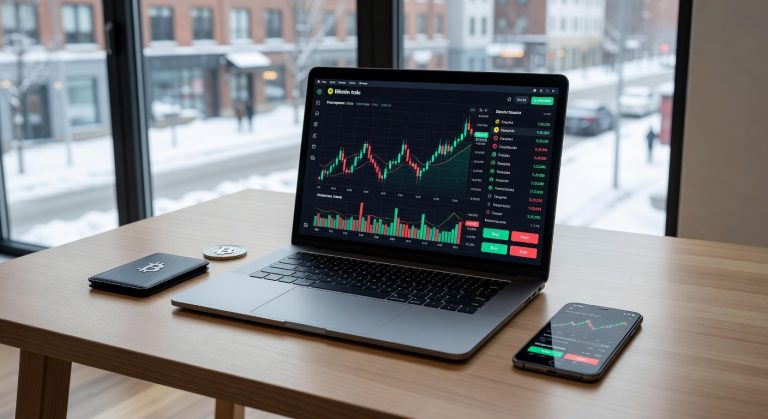
Best Crypto Wallets and How to Choose One
Introduction
Choosing the right crypto wallet can make the difference between smooth, secure access to your funds and a costly mistake. With scams, phishing attempts, and ever-changing security threats, the “best” option depends on how you buy, store, and use crypto.
This guide compares the top crypto wallets across the most important categories: security, ease of use, control over your keys, backup options, and support for common coins. Whether you’re a beginner, a frequent trader, or a long-term holder, you’ll get a clear view of which wallets fit your needs.
You’ll also learn how to choose safely—what features actually matter, what red flags to watch for, and how to set up your wallet for maximum protection. By the end, you’ll be ready to pick a wallet that matches your risk tolerance and usage style.
What Counts as a Secure Crypto Wallet?
When people ask for the best crypto wallet, they often focus only on user experience—an appealing interface, fast setup, or wide asset support. However, in 2026, real security is less about aesthetics and more about how the wallet handles keys, transactions, and threat models. A secure crypto wallet should be designed so that compromise of your device or browser does not automatically become compromise of your funds.
First, the most important criterion is how the wallet protects private keys. In practice, that means the wallet should support non-custodial operation and ideally use hardware-backed signing (e.g., secure elements in devices or dedicated hardware wallets). If your private keys never leave protected hardware, attackers gain far less leverage even if they obtain malware access. Additionally, robust wallets implement strong backup and recovery flows that resist “social engineering” failures, such as careless seed sharing or weak recovery procedures.
Next, consider the wallet’s approach to transaction safety. A secure wallet should clearly present destination addresses, chain context, and token details before signing. This also includes better defenses against phishing and malicious approvals. For example, reputable wallets help users detect suspicious token allowances, minimize unnecessary blanket approvals, and support revocation workflows. These measures are crucial because many real-world losses come not from direct key theft, but from users unknowingly signing harmful permissions.
Then, privacy and network security matter as well. Wallets should use reputable RPC providers by default, support failover or user-configurable endpoints, and avoid leaking sensitive metadata more than necessary. While privacy is not the only security axis, weaker network practices can facilitate targeting and transaction tracing, increasing the risk of future account-level attacks.

Furthermore, a secure crypto wallet earns trust through transparent engineering practices. Look for ongoing security audits, clear versioning, and a history of quick patching when vulnerabilities are found. Just as importantly, the wallet’s threat model should be documented: whether it mitigates device compromise, browser attacks, or operator-side risks.
Finally, availability and usability should reinforce security, not undermine it. Even a strong wallet can lead to losses if recovery instructions are unclear or if users are nudged toward insecure defaults. For readers in specific regions, you may also find it helpful to compare local options—such as crypto wallet canada users seeking compliant support channels—while still prioritizing non-custodial key control and independent verification of safety claims.
Overall, security is a layered property: protected keys, transaction guardrails, careful network behavior, and resilient development practices working together.
Hot Wallets vs Cold Wallets: Which Fits Your Risk Level?
Choosing between hot and cold storage is one of the most important security decisions when selecting a crypto wallet. In practice, the “best crypto wallet” for you is not the one with the most features—it’s the one that matches your risk tolerance and how you plan to use crypto day to day. A clear understanding of the trade-offs will help you avoid costly mistakes, especially when managing larger balances.

Hot wallets are connected to the internet. Because they support frequent transactions, they’re often ideal for everyday activity such as trading, interacting with decentralized applications (dApps), or moving funds across networks. However, connectivity increases exposure to phishing, malware, and compromised browser environments. Even if the wallet itself is secure, your device and your online behavior become part of the threat model.
By contrast, cold wallets keep private keys offline. This category typically includes hardware wallets or air-gapped setups, which significantly reduce the risk of remote attacks. They are a common choice for long-term holding because the attack surface is smaller. The downside is operational friction: you must deliberately connect the device, confirm transactions, and manage backups.
To decide which model fits you best, start with your usage pattern. If you regularly swap tokens or use dApps, a hot wallet for operational funds can make sense, while keeping the bulk of assets in a cold wallet. This “split-storage” approach limits potential losses in case your hot wallet is compromised, yet preserves liquidity where you need it.
Next, consider the size and sensitivity of your holdings. For substantial balances, cold storage is usually the safer baseline. For smaller amounts or short-term strategies, hot wallets can be acceptable if you follow strong hygiene: use reputable software, keep your device updated, enable phishing-resistant protections where available, and verify addresses carefully.

Finally, regional availability matters when comparing options. For readers searching for a crypto wallet canada solution, it’s worth checking both local support channels and the wallet’s security model—not just price or convenience. As a rule, reputable wallets provide robust key management, clear recovery processes, and transparent security practices.
In the next section, we will connect these principles to concrete selection criteria, so you can evaluate wallets methodically rather than by marketing claims alone.
Custody, Private Key, and Exchange Risks
When people compare the best crypto wallets, they often focus on features like swapping, staking, or user experience. However, the most important questions are about custody and the private key. In practice, “where your keys live” determines how exposed you are to theft, freezes, or operational mistakes. Therefore, the safest wallet choice starts by understanding the difference between non-custodial and custodial models.
In a custodial wallet, a third party holds custody of your assets and typically manages the private keys. While this can improve convenience—especially for users new to self-custody—it also introduces exchange and platform risks. For example, if the provider’s systems are compromised, users may be unable to move funds quickly. Even without hacks, account freezes, compliance errors, or insolvency can halt withdrawals. As a result, a crypto wallet backed by a custodian is only as secure as the custodian’s security program and operational resilience.
By contrast, a non-custodial wallet gives you control of the private key. This design reduces dependency on third parties, shifting risk to your own operational discipline. Next, the biggest threat becomes key management: losing a recovery phrase, storing it insecurely, or approving malicious transactions. Modern wallet design helps with security prompts and transaction previews, but no interface can prevent a user from exposing the seed phrase to phishing sites or malware.
To compare securely, evaluate how the wallet handles signing. For instance, hardware wallets typically isolate keys in secure elements, lowering the impact of device compromise. Meanwhile, mobile or desktop wallets rely more heavily on OS-level protections and good user practices. Consequently, the “best crypto wallet” for one user may not be optimal for another, especially if your threat model includes malware, SIM-swap attempts, or browser-based phishing.
Additionally, exchange-related risks are not limited to centralized exchanges. Some “wallet” products are essentially exchange wrappers, bundling custody with extra services. It’s wise to verify whether the product is truly self-custodial. If you’re searching for a crypto wallet canada option, confirm regulatory branding versus actual custody and key ownership. Then check transparency: third-party audits, reproducible builds (where applicable), and clear documentation on key derivation and backup recovery.
Finally, consider your tolerance for operational responsibility. If you can manage seeds safely and verify addresses, non-custodial solutions are usually the stronger security path. If you require operational simplicity, you may accept custodial trade-offs—just ensure you understand withdrawal limits and the provider’s incident history. In either case, custody and private-key control remain the deciding factors behind real-world safety.

Best Hardware Wallet Picks for Bitcoin and Multi-Chain Users
For Bitcoin users, the safest default choice is typically a hardware wallet, because private keys remain offline and signing happens inside the device. This reduces the attack surface against malware, phishing links, and compromised browser extensions. At the same time, multi-chain users need broader compatibility—support for multiple networks, tokens, and account standards—without sacrificing that offline protection. Therefore, the “best crypto wallet” in practice is the one that matches your assets and your operational habits.
First, Ledger remains a leading option for both Bitcoin and multi-chain portfolios. Its devices support major Bitcoin workflows and also provide strong tooling for managing Ethereum-based tokens and other ecosystems. In addition, Ledger’s ecosystem frequently updates firmware and app support, which is crucial as new token standards and network changes emerge. If you are looking for a practical solution in crypto wallet Canada, Ledger’s widespread distribution can be a decisive advantage.
Next, Trezor is another top hardware wallet pick, especially for users who value transparent security practices and a straightforward user experience. Trezor’s secure element design helps protect keys from direct exposure, while its open approach to auditing and education often appeals to security-conscious teams. As your portfolio grows beyond Bitcoin, Trezor’s multi-network support and integration with common wallet interfaces make it a reliable “set-and-secure” device.
Then, for users prioritizing simplicity and modern usability, Coldcard is worth noting. While it is more technical in orientation, it offers robust Bitcoin-focused security features that can appeal to advanced users who want fine-grained control. However, if your goal is heavy multi-chain usage, you may want to verify token and network coverage before committing.

Even with reputable hardware wallets, choosing the right one depends on practical criteria. Look for (1) support for your specific chains, (2) availability of secure recovery options that you can safely store offline, and (3) a mature firmware update process. Also, confirm how the device displays addresses during signing—this is essential for preventing transaction redirection and ensuring you can verify recipients accurately.
Finally, consider the threat model. If your primary risk is malware on a daily computer, a hardware wallet with proper PIN protection and limited exposure is often enough to materially reduce theft probability. If you operate across many networks, prefer wallets with consistent address verification and dependable multi-chain integrations. In this way, you can narrow down the best hardware choice while keeping security and usability aligned.
Best Software Wallet Options for Everyday On-Chain Activity
For daily on-chain activity, the most practical choice is usually a software wallet: it’s fast, convenient, and integrates smoothly with decentralized applications. That said, “convenient” must not come at the expense of security. Therefore, when comparing the best crypto wallet options, focus on how each wallet handles private keys, transaction signing, and device integrity.
To start, prioritize wallets that support robust local key storage (or encrypted keychains) and never expose your seed phrase to third-party services. Ideally, the wallet signs transactions on-device and uses clear confirmation screens so you can verify recipient addresses and amounts. In everyday trading, staking, and swapping, small mistakes—like a wrong token contract—can cause irreversible losses, so UI clarity becomes a real security feature.
Next, consider wallets with strong account abstraction and recovery hygiene. Many modern software wallets provide guided security steps, biometric unlock, and optional hardware-backed features. While this doesn’t replace proper operational security, it significantly reduces the likelihood of accidental compromise. As a result, users who interact with multiple networks benefit from wallets that minimize the number of steps required to act safely.
Another key factor is compatibility. Everyday activity typically spans DeFi protocols, NFT marketplaces, and cross-chain bridges. Hence, choose a wallet that supports the networks you actually use, plus common token standards (such as ERC-20) and reputable routing for swaps. If you regularly transact from Canada, you may also want to check local support resources—some teams and guides are easier to follow with a “crypto wallet canada” ecosystem in mind, even if the wallet itself is global.
Security also depends on wallet maintenance. Look for frequent releases, transparent changelogs, and a track record of responding to vulnerabilities. Equally important, verify that the wallet avoids risky permissions, doesn’t rely on questionable RPC endpoints by default, and offers features like address book verification and customizable gas settings to reduce transaction surprises.
Finally, remember that the “best” software wallet is the one that matches your behavior. If you send frequent transactions, a responsive interface and predictable signing flow matter as much as cryptography. If you want stronger protection, consider using a software wallet as your front-end while keeping long-term holdings in a hardware wallet setup.

How Wallet Security Features Reduce Scams and Theft
Choosing the best crypto wallet is not only about brand recognition or supported chains; it is about how the wallet prevents human error and technical attacks. In practice, most thefts stem from phishing, malicious approvals, malware, or compromised recovery credentials. Therefore, modern wallet security features focus on reducing these failure points before funds are ever at risk.
To begin with, phishing-resistant authentication is one of the most important defenses. Many reputable wallets use hardware-backed keys, passkeys, or approval screens that clearly display destination addresses and transaction intent. As a result, users are less likely to sign harmful transactions or interact with fake websites that impersonate exchanges and dApps. In high-scam environments, this clarity can be the difference between safe transfers and irreversible loss.
Next, recovery and backup mechanisms determine how quickly a user can respond to compromise. Secure wallets typically avoid insecure “seed-only” flows by using encrypted local storage, rate-limited recovery, or hardware confirmations. Additionally, good wallets encourage secure offline backup practices and provide warnings when backups are created or exported. Importantly, if someone obtains your seed phrase, nearly every “security feature” becomes irrelevant—so the wallet design should make seed handling safer by default.
Then, transaction-level protections help mitigate the most common DeFi-related scams: malicious token approvals. A wallet that supports ERC-20 allowance limits, revoke-by-default workflows, and clear permission summaries reduces the chance that users grant sweeping spending rights. Similarly, network and contract address checks can alert you when a dApp is interacting with unexpected contracts, even if the UI looks familiar.
Another key area is malware resilience and secure signing. Non-custodial wallets that perform signing on isolated devices or hardware reduce the impact of endpoint compromise. Meanwhile, contact lists, domain-aware signing, and transaction simulation can prevent “blind signing” that attackers rely on. If the wallet can show what will happen before you approve, it discourages scammer pressure tactics.
Finally, operational security matters beyond the app itself. For users in regions such as crypto wallet Canada markets, reliable device support, transparent security documentation, and fast patch cycles are indicators of maturity. To choose confidently, prioritize wallets that combine strong key management, explicit transaction previews, controlled approvals, and robust recovery safeguards. When these layers work together, scams and theft become significantly harder to execute—even when adversaries target you directly.
How to Choose the Right Wallet for Your Assets and Use Cases
Selecting the right crypto wallet starts with matching the wallet’s security model to how you plan to use your assets. In practice, the “best crypto wallet” is not universally the same for everyone. A trader who moves funds daily has different needs than a long-term holder who prioritizes storage safety. Therefore, begin by listing your primary use case: holding, staking, decentralized finance (DeFi), swapping, or interacting with smart contracts.
Next, evaluate the wallet type. Custodial wallets simplify access by keeping keys on your behalf, but they introduce counterparty risk. Non-custodial wallets, in contrast, place control of private keys in your hands, reducing reliance on third parties. As a rule of thumb, if your goal is long-term asset protection, prioritize non-custodial options with strong key management. Then, if you actively use DeFi, choose a wallet with good contract interaction support and clear transaction previews.
After choosing the general category, focus on where the keys live. A hardware wallet stores private keys offline, which significantly lowers exposure to malware and remote compromise. Meanwhile, software wallets may be more convenient, but they are more sensitive to endpoint security. Consequently, for meaningful balances, a hardware-based approach is usually the most defensible path. For smaller amounts or frequent transfers, a well-hardened mobile wallet can be acceptable—provided you maintain strong device security.
Security hygiene also matters at the operational level. Look for wallets that support reputable backup methods, multi-device recovery, and standard protections such as passcodes and biometric unlocks. Additionally, verify whether the wallet uses strong derivation paths, supports multiple accounts, and clearly communicates network fees. These details reduce the likelihood of user errors—often the most common source of losses.
Then consider ecosystem compatibility and regional availability. Many users search for a “crypto wallet Canada” option because of local support channels, onboarding, or compliance practices. While availability varies by provider, the underlying technical requirements remain the same: reliable security, transparent custody assumptions, and consistent updates.
Finally, test before you commit. Begin with small transfers, confirm address formatting, and validate token balances and chain selections. If the wallet supports test networks or watch-only modes, use them to rehearse your workflow. By taking these steps, you ensure your crypto wallet aligns with your risk tolerance and usage patterns—turning convenience into a managed, secure process rather than an unverified assumption.
Frequently Asked Questions
What’s the difference between a hardware wallet and a “hardware-backed” software wallet?
A hardware wallet signs transactions inside a dedicated secure element, so your private key never leaves the device. A “hardware-backed” wallet uses your device’s secure enclave/TPM to protect keys, but the risk surface is still larger on general-purpose computers. For day-to-day use, hardware-backed can be fine; for meaningful balances, a true hardware wallet is harder to beat.
How do I reduce risk from malicious dApp approvals and fake “connect wallet” flows?
Always verify the contract address before approving anything, and review spending limits (not just the “Connect” button). Revoke old approvals you don’t need, and prefer wallets that show clear token allowances and transaction details. If a dApp asks for broad unlimited approvals, treat it as a red flag and use safer allowance patterns.
What’s the safest way to handle seed phrases and backups in practice?
Write the seed phrase down offline, store it in multiple physical locations, and never type it into random sites or apps. Use a passphrase (“25th word”) when your wallet supports it—this adds a strong layer against stolen backups. Test restores with a small amount first, then upgrade your backup process once you’ve confirmed recovery works.
If I use multiple wallets, how do I avoid address confusion and sending to the wrong chain?
Use network-aware addresses and copy from QR/address book entries that include the chain context. For multi-chain setups, keep separate accounts per chain and label them clearly in your wallet UI. Before sending, do a final check: chain, token contract, and decimals—most “lost funds” incidents come from mismatched networks or tokens.
Conclusion
Choosing the best crypto wallet comes down to matching the wallet’s security model, usability, and compatibility with your needs. The safest options are typically non-custodial wallets (especially hardware wallets) because they keep private keys under your control, reducing exposure to exchange or platform risks. However, usability matters: if you trade frequently or need quick access, a reputable software wallet with strong protections (biometrics, secure backups, and robust encryption) may be more practical. If you hold large amounts for long-term storage, prioritizing a hardware wallet plus secure backup procedures is usually the smarter choice.
To choose the right wallet, evaluate four core factors. First, determine custody: self-custody for maximum control versus custodial wallets for convenience. Second, confirm supported assets and networks so you don’t face limitations later. Third, assess security features—seed phrase handling, passphrase options, multi-factor authentication where applicable, and protection against phishing and malicious links. Fourth, consider backup and recovery: your wallet should make it clear how to restore access if your device is lost, including safe ways to store the seed phrase offline.